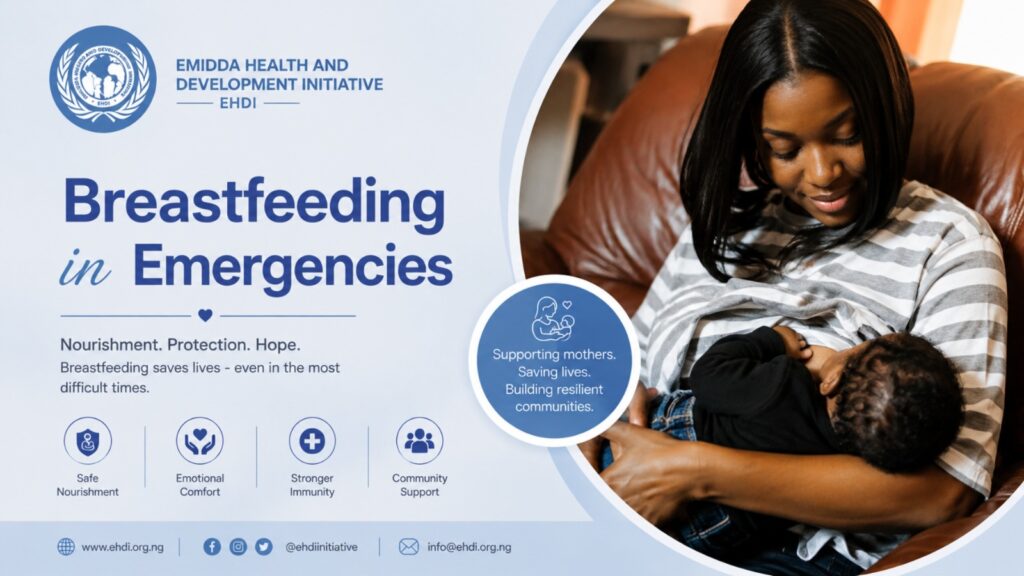
🍼 Why Breastfeeding Matters in Emergencies
During emergencies—whether caused by conflict, displacement, floods, or earthquakes—families often face food shortages, unsafe water, and disrupted healthcare systems. In such situations, breastfeeding becomes more than just nourishment; it is a survival strategy.
- Safe & Clean: Breast milk is sterile and protects babies from contaminated water and unhygienic feeding practices.
- Nutritionally Complete: It provides all the nutrients infants need for the first six months of life.
- Immune Protection: Breast milk contains antibodies that shield babies from infections, which are common in crowded shelters or camps.
- Emotional Comfort: Nursing calms both mother and child, reducing stress in chaotic environments.
Challenges Mothers Face
- Stress and trauma may affect milk supply or confidence.
- Lack of privacy in shelters can discourage mothers from breastfeeding.
- Distribution of formula in emergencies can undermine breastfeeding, especially when clean water is unavailable
✅ Solutions & Support
- Safe Spaces: Establish breastfeeding corners in camps or shelters.
- Peer Support: Train volunteers to encourage and guide mothers.
- Education: Inform communities that breast milk is the safest option in emergencies.
- Avoid Formula Unless Necessary: If formula is used, it must be prepared safely with clean water and proper hygiene
A Mother’s Courage in the Floods
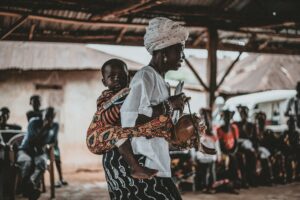
When the river in Amina’s village overflowed, she and her two-month-old baby were forced to flee to a crowded school turned shelter. Food was scarce, and clean water was almost impossible to find. Aid workers handed out biscuits and powdered milk, but Amina remembered the advice from her local clinic: “Your breast milk is your baby’s strongest protection.”
Despite exhaustion and fear, she held her baby close and continued breastfeeding. Other mothers, worried about their own milk supply, watched her. Soon, Amina became a source of hope—sharing her story and encouraging them to trust their bodies. Weeks later, while many children in the camp fell ill from diarrhea caused by unsafe water, Amina’s baby remained healthy and strong. Her courage reminded everyone that in emergencies, breastfeeding is not just feeding—it is survival.
Call to Action: Protecting Babies in Emergencies
For Mothers:
- Trust your body—your milk is enough, even in times of stress.
- Hold your baby close and breastfeed as often as possible.
- Remember: every drop of breast milk is protection against disease.
For Communities & Aid Workers:
- Create safe, private spaces for breastfeeding in shelters.
- Encourage and support mothers—confidence is key to milk supply.
- Avoid unnecessary formula distribution unless medically required.
- Share stories of courage, like Amina’s, to inspire others.
- For Policymakers & Leaders:
- Integrate breastfeeding support into emergency response plans.
- Train health workers and volunteers in breastfeeding counseling.
- Ensure emergency kits include resources for breastfeeding support, not just formula.
“In every emergency, breast milk is more than food—it is medicine, comfort, and survival. Let us stand together to protect the youngest lives by promoting and supporting breastfeeding. One mother, one baby, one community at a time—we can save lives.”
#BreastfeedingInEmergencies#BreastMilkSavesLives#NourishmentInCrisis#ProtectBabiesInEmergencies#EmergencyBreastfeedingSupport