
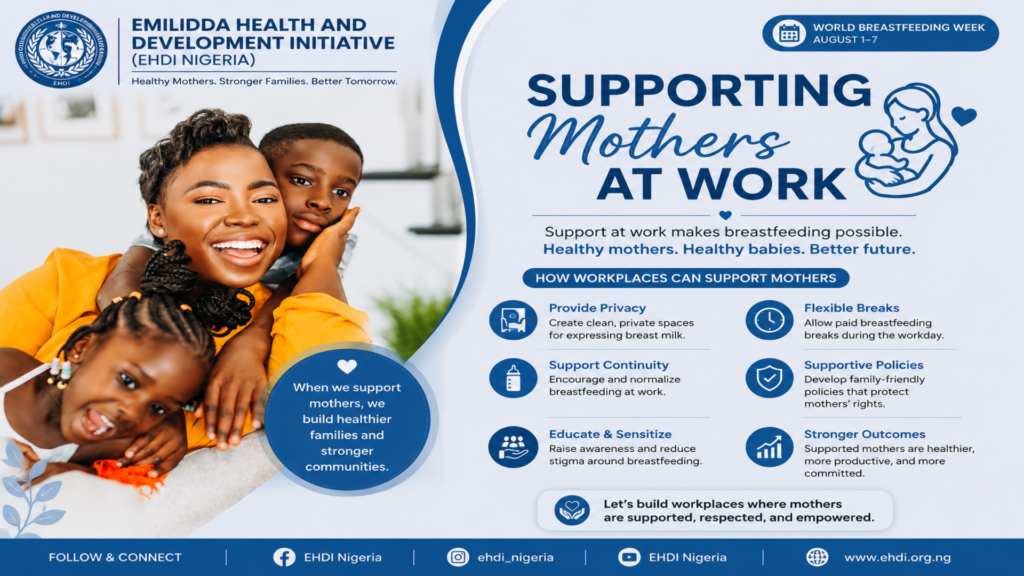
👩🍼 Breastfeeding is one of the most powerful investments in a child’s health and future. Yet, many mothers face challenges in continuing breastfeeding once they return to work. Creating supportive workplaces is not just a matter of compassion—it is a matter of public health, productivity, and sustainable development.
Why Workplace Support Matters
- Health Benefits for Babies: Breastfed infants have stronger immunity, lower risk of infections, and improved brain development.
- Health Benefits for Mothers: Breastfeeding reduces the risk of certain cancers, diabetes, and postpartum depression.
- Economic Benefits: Supporting breastfeeding reduces healthcare costs, absenteeism, and turnover, while increasing employee loyalty and productivity
Six Key Actions Workplaces Can Take
- Provide Privacy Create clean, private, and comfortable spaces for mothers to express breast milk. A simple room with a chair, sink, and refrigerator can make a huge difference.
- Allow Flexible Breaks Offer paid breastfeeding breaks during the workday. This ensures mothers can maintain milk supply and balance work responsibilities.
- Support Continuity Normalize breastfeeding at work by encouraging open conversations and reducing stigma. Leaders and managers play a vital role in setting the tone.
- Develop Supportive Policies Implement family‑friendly policies such as extended maternity leave, paternity leave, and flexible work arrangements. These protect mothers’ rights and strengthen family bonds.
- Educate and Sensitize Conduct awareness programs for employees to understand the importance of breastfeeding. This helps build empathy and collective support.
- Achieve Stronger Outcomes Workplaces that support mothers see healthier, more productive, and more committed employees—creating a win‑win for families and organizations.
Case Example
In countries where workplace breastfeeding policies are enforced, exclusive breastfeeding rates rise significantly. For instance, companies that provide lactation rooms and flexible schedules report higher employee satisfaction and retention.
Real-Life Story: A Mother’s Journey Back to Work
Amaka’s Story Amaka, a young mother working in a Lagos-based bank, was anxious about returning to work after maternity leave. She worried that her baby would miss out on the benefits of breastfeeding. Fortunately, her workplace had recently introduced a lactation room and flexible break times.
“Having a private space to express milk and the support of my manager made all the difference. I felt valued as both a mother and a professional. My baby continued to thrive, and I was able to focus on my work without guilt.”
Her story highlights how small workplace adjustments can empower mothers to balance career and family health.
Testimonial from an Employer
HR Manager’s Perspective Chinedu, an HR manager at a tech company, shared:
“When we introduced breastfeeding breaks and a family-friendly policy, we noticed fewer sick days among staff and higher morale. Supporting mothers is not just the right thing to do—it’s smart business.”
This testimonial reinforces the idea that workplace support benefits both employees and organizations.
Building a Culture of Care
Supporting mothers at work is not just about facilities—it’s about culture. When organizations respect and empower mothers, they contribute to healthier families, stronger communities, and a better future for all.
📢 Call to Action
Let’s build workplaces where mothers are supported, respected, and empowered. By investing in breastfeeding support, we invest in the health of our children, the strength of our workforce, and the future of our society.
- #SupportingMothersAtWork
- #WorkplaceBreastfeedingSupport
- #HealthyMothersHealthyBabies
- #FamilyFriendlyWorkplace
- #BreastfeedingRights
- #EmpoweredMothers